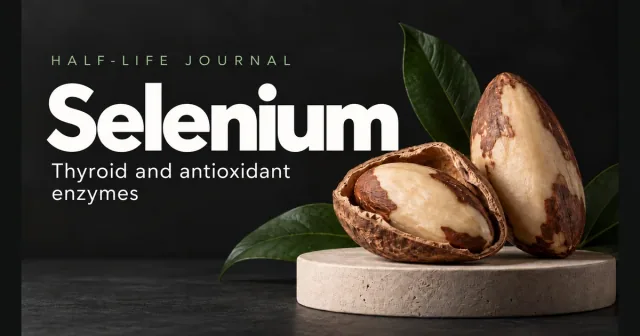
This page is part of: Selenium
Short answer
The richest food sources of selenium are Brazil nuts, seafood, meat, poultry and organ meats. The amount in plant foods varies greatly with the selenium content of the soil they grew in; in Brazil nuts, even a single nut can exceed the daily reference. The values below are based on the NIH’s US servings and may not apply exactly to products in Türkiye. [1]
Which foods contain selenium?
According to the NIH, because selenium is bound to protein, protein-rich foods are the best sources: Brazil nuts, seafood, meat, poultry and organ meats. Grains and dairy products also contribute. In the US, the main sources of dietary selenium are bread, grains, meat, poultry, seafood and eggs. [1] The table below is taken from the NIH’s Table 2; the µg values are per serving and the Daily Value (DV) is 55 µg.
| Food (US serving) | Selenium (µg) | Percent of DV |
|---|---|---|
| Brazil nuts, 1 oz (6–8 nuts) | 544 | 989% |
| Yellowfin tuna, cooked, 3 oz | 92 | 167% |
| Sardines, canned in oil (with bones), 3 oz | 45 | 82% |
| Shrimp, cooked, 3 oz | 42 | 76% |
| Pork chop, bone-in, grilled, 3 oz | 37 | 67% |
| Beef (round) steak, baked, 3 oz | 37 | 67% |
| Spaghetti, boiled, 1 cup | 33 | 60% |
| Beef liver, pan-fried, 3 oz | 28 | 51% |
| Turkey, boneless, baked, 3 oz | 26 | 47% |
| Pacific cod, cooked, 3 oz | 24 | 44% |
| Chicken (white meat), baked, 3 oz | 22 | 40% |
| Cottage cheese (1% fat), 1 cup | 20 | 36% |
| Ground beef (25% fat), grilled, 3 oz | 18 | 33% |
| Hard-boiled egg, 1 large | 15 | 27% |
| Canned baked beans, 1 cup | 13 | 24% |
| Oatmeal (cooked with water), 1 cup | 13 | 24% |
| Brown rice, cooked, 1 cup | 12 | 22% |
| Whole wheat bread, 1 slice | 8 | 15% |
| Yogurt (low-fat), 1 cup | 8 | 15% |
| Milk (1%), 1 cup | 6 | 11% |
| Lentils, boiled, 1 cup | 6 | 11% |
| White bread, 1 slice | 6 | 11% |
| Spinach, frozen, boiled, ½ cup | 5 | 9% |
| Pistachios, dry roasted, 1 oz | 3 | 5% |
| Banana (sliced), ½ cup | 1 | 2% |
| Potato, baked (with skin), 1 | 1 | 2% |
| Carrots (raw), ½ cup | 0 | 0% |
1 oz is about 28 g and 3 oz about 85 g; the “cup” in the table is the US cup measure (about 240 mL) and is larger than the water glass (su bardağı) used in Türkiye. The NIH table also includes some other foods; selected rows are given here. [1]
Why do Brazil nuts need a separate warning?
According to USDA FoodData Central data, Brazil nuts contain an average of 544 µg/oz (6–8 nuts) of selenium; the NIH states that in other analyses the values vary greatly. The NIH also reports that a single nut can contain 68–91 µg and that regular consumption can lead to selenium toxicity. [1] Even a single nut can exceed the RDA of 55 µg; the 1 oz (6–8 nuts) value in the table is above both the NIH upper limit of 400 µg and the EFSA upper limit of 255 µg. EFSA states that exceeding the upper limit in adult consumers is expected only in those who use high-dose supplements or regularly consume Brazil nuts. [2] The upper limit is a reference valid for chronic intake; it does not mean that occasional consumption causes poisoning, but because the amount in this food varies over a very wide range, the uncertainty about a serving is greater than for other foods.
Why does the selenium in foods vary from region to region?
Inorganic selenium in soil and groundwater is taken up by plants and converted into organic forms (mostly selenomethionine and selenocysteine). The selenium content of plant foods therefore varies greatly by geography. The difference is smaller in animal products, because animals keep their tissue levels within a certain range through homeostatic mechanisms and formulated animal feeds generally contain consistent selenium levels. [1] Because of this variation in plant foods, the spaghetti and bread values in the table are US-specific averages.
The NIH reports that deficiency is very rare in the US and Canada, whereas in some regions of China intake is among the lowest in the world, and that in some European countries, particularly among vegans, mean intake is low. [1] This shows that food choice and region are jointly determining.
Do these values apply in Türkiye?
The NIH table is US data. Measured selenium values for grains, eggs, meat and fish sold in Türkiye are not included in this table; soil-dependent differences are expected in plant products. The data accessible from Türkiye concern blood levels rather than food content: in 218 healthy people in Ankara, mean serum selenium was 74 ± 16 µg/L in adults aged 18–48, which the authors assessed as within a range that can be considered adequate. This measurement dates from 1994 and is from a single city. [4] An old measurement from a single city cannot be a basis for general statements such as “there is selenium deficiency in Türkiye” or “there is not.”
Who may have difficulty getting enough selenium from food?
The NIH reports that selenium deficiency is very rare in the US, but that people living in selenium-poor regions, patients on long-term hemodialysis and people living with HIV are at risk of low intake. In dialysis patients, loss of appetite and dietary restrictions can reduce intake, and dialysis also removes some selenium from the blood; even so, the level depends on the person’s own selenium status. [1] In some European countries, particularly in vegan populations, mean intake has been reported to be low. Because the amount in plant foods derives from soil, estimating adequacy “by looking at a food list” is not reliable in these groups.
Plasma or serum selenium is used to measure status; the NIH states that 8 µg/dL and above is generally considered adequate in healthy people, and that hair and nail selenium reflect intake over months to years. [1]
Reference values in pregnancy and breastfeeding
The US RDA values reported by the NIH are 60 µg per day in pregnancy and 70 µg in breastfeeding. [1] EFSA reports that, because of adaptive changes in metabolism during pregnancy, the AI of 70 µg set for adult women is also valid in pregnancy, and that for breastfeeding women an AI of 85 µg was set, with 15 µg additional intake because of the amount passing into milk. [3] EFSA’s 2023 upper limit (255 µg/day) also covers pregnant and breastfeeding women. [2] These values are for the total amount from food and supplements; in pregnancy, the product decision is made with the physician.
Is it possible to reach the daily reference with food?
The US RDA reported by the NIH is 55 µg per day above age 14; EFSA’s adequate intake value for adults is 70 µg. [1] [3] According to the table, 3 oz of cooked yellowfin tuna alone provides 92 µg, 3 oz of shrimp 42 µg and 1 hard-boiled egg 15 µg. The NIH reports that mean selenium intake in the US from foods and beverages is 108 µg/day and that most people get an adequate amount. [1] These data belong to the US; they have no equivalent for intake in Türkiye.
For comparison with supplements: the NIH reports that most multivitamin products contain 55 µg, while products containing only selenium usually contain 100–400 µg; these amounts can be far above the food servings in the table. [1] The upper limit applies to the total amount from foods and supplements. This page does not recommend a personal dose; for a person using a high-dose product or regularly eating Brazil nuts, the decision is made by the treating physician and dietitian.
Detailed guideWhat is selenium? Reference intakes, upper limit and selenosis Detailed guideSelenium benefits: cancer, thyroid, diabetes and heart claimsFrequently asked questions
Which food contains the most selenium?
Brazil nuts. According to the NIH, 1 oz (6–8 nuts) contains an average of 544 µg; a single nut can provide 68–91 µg. Tuna, sardines, shrimp and meat follow.
Can one Brazil nut be eaten a day?
The amount varies greatly; a single nut can exceed the daily reference (55 µg). EFSA states that people who regularly consume Brazil nuts may exceed the selenium upper limit. No personal number of nuts is recommended.
Why does the amount of selenium in foods vary?
Plants take selenium from the soil; because the selenium content of soil varies greatly by region, the amount in plant foods varies too. The difference is smaller in animal products.
How much selenium is in an egg?
According to the NIH, 1 large hard-boiled egg contains 15 µg of selenium (27% of the Daily Value). This is US data.
Sources
- Guideline / review NIH Office of Dietary Supplements — Selenium: Health Professional Fact Sheet (2025)Back to text ↑
- Institution EFSA NDA Panel — Scientific opinion on the tolerable upper intake level for selenium (EFSA Journal) (2023)Back to text ↑
- Institution EFSA NDA Panel — Scientific Opinion on Dietary Reference Values for selenium (EFSA Journal) (2014)Back to text ↑
- Human study Selenium status in Turkey. II. Serum selenium concentration in healthy residents of different ages in Ankara. (1994)Back to text ↑
Method: Institutional clinical guidance and relevant studies were compared. Each finding is presented with its population, outcome, sources and limitations. Independent medical review has not yet been completed.
Updated
This content is for information only and is not medical advice. It does not recommend doses, products or vendors. Talk to your clinician before making any health decision.