At a glance
- Curcumin is the main compound that gives turmeric root its yellow color; the NCCIH states that the health effects of turmeric are mostly attributed to curcuminoids (including curcumin). [1]
- Curcumin is very poorly absorbed when taken by mouth; when 2 g of curcumin was taken alone, levels in human serum were found to be either unmeasurable or very low. [3]
- According to the NCCIH, it cannot be said with certainty that turmeric/curcumin is useful for any health purpose; the most studied areas have been knee osteoarthritis, fatty liver, and blood lipids. [1]
- Liver injury has been reported with turmeric products: 10 cases were identified in the DILIN network in the US, and one patient died of liver failure; the NCCIH highlights products with enhanced absorption. [5] [1]
- This guide does not set a personal dose.
What is curcumin, and is it the same as turmeric?
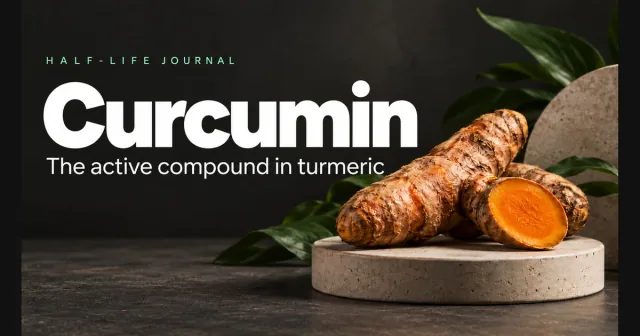
Curcumin is a yellow-colored compound found in the rhizome (root stem) of the turmeric plant (Curcuma longa). Turmeric is a plant of the ginger family grown in Southeast Asia and India, and its root has been used in cooking, cosmetics, and traditional medicine. Its yellow color comes from curcumin. [1]
Curcumin is not the whole of turmeric. A medicinal chemistry review reports that curcumin makes up at most about 5% of turmeric. [2] In supplements, curcuminoid extracts isolated from turmeric are mostly used; the NCCIH states that the amount of curcumin that orally taken curcumin products actually contain varies and that they often also contain other plant substances such as piperine from black pepper. [1]
This difference matters in practice: turmeric used in the kitchen and a concentrated curcumin extract in a capsule do not provide the same dose of curcumin, and what is tested in studies is mostly the extract. What the evidence says about turmeric as a spice is covered on a separate page.
Detailed guideTurmeric benefits: what does the evidence say for use as a spice?Why is curcumin not absorbed well, and do piperine and special formulas change this?
Curcumin has low bioavailability because it is metabolized rapidly in the liver and the intestinal wall. In a 1998 study in India examining rats and healthy human volunteers, when 2 g of curcumin was given alone, human serum levels were found to be either undetectable or very low. When 20 mg of piperine was added to the same dose (piperine is a known substance that inhibits glucuronidation in the liver and gut), the authors reported a 2,000% increase in bioavailability. [3]
This result is frequently cited, but it should be read with its limits. The human part of the study was done in healthy volunteers, with a single dose and short-term measurement (in the first hours); it does not measure a clinical disease outcome. A serum level raised by piperine does not mean a better outcome in a disease.
There is a similar limit for special formulas. In a randomized, double-blind, crossover human study comparing a phospholipid (lecithin) formulation with an unformulated curcuminoid mixture, total curcuminoid absorption was found to be about 29 times higher; however, only phase-2 metabolites (conjugates) were detected in plasma, and plasma levels still remained markedly below what is needed to inhibit most of curcumin’s anti-inflammatory targets. The first author of the study worked at a dietary supplement company. [4] So a form that is “absorbed more” does not mean a form that “reaches a drug-like effective level.”
Another point emphasized by the NCCIH relates to safety: liver injury has been reported with curcumin products with enhanced absorption (high bioavailability). [1] So solving the absorption problem brings both hope and risk (detailed below).
The “PAINS” critique: why is curcumin a controversial compound?
A review published in 2017 in the Journal of Medicinal Chemistry states that curcumin has been classified as a candidate for “PAINS” (pan-assay interference compounds — compounds that mislead many laboratory tests) and “IMPS” (invalid metabolic panaceas). The authors argue that curcumin is an unstable, reactive compound with no bioavailability and should therefore be considered an “extremely unlikely” starting point for drug development; they add that the possible false activity in laboratory and in vivo experiments has led to more than 120 clinical trials. [2]
The same article claims that, at that date, “no double-blind, placebo-controlled trial of curcumin has been successful.” This sentence is an assessment from 2017 and is the authors’ opinion. In later years, meta-analyses reporting pain reduction compared with placebo in knee osteoarthritis have been published (details on the curcumin benefits page); the NCCIH also states that there are several meta-analyses for osteoarthritis, that the preliminary evidence is positive, but that higher-quality evidence is needed. [1] Therefore it is not possible to count either extreme (“proven” or “completely empty”) as correct; evidence exists, but it is short-term, heterogeneous, and far from conclusive.
For which conditions has curcumin been studied, and how strong is the evidence?
The NCCIH states that many studies have been done on the safety and usefulness of curcumin and turmeric, but that it cannot be said with certainty that it is useful for any health purpose. The main areas are as follows. [1]
| Topic | Status as reported by the NCCIH | Limit of the evidence |
|---|---|---|
| Knee osteoarthritis | Several meta-analyses; initial evidence is positive for knee pain and stiffness and joint function. [1] | Higher-quality evidence needed; effect of absorption not understood. The effect of topical (skin-applied) curcumin on knee pain is uncertain. |
| Nonalcoholic fatty liver disease (NAFLD) | Initial research suggests there may be improvement in some measures. [1] | Which measures improve consistently is uncertain. |
| Oral mucositis due to cancer treatment | Initial evidence that use by mouth or as a mouthwash may relieve symptoms. [1] | Preliminary level. |
| Other conditions | There is not enough evidence to draw a firm conclusion. [1] | — |
Individual studies and meta-analyses in areas such as depression, ulcerative colitis, blood sugar, CRP, cancer, and Alzheimer’s, together with who each examined and their limits, are collected on the page below.
Detailed guideCurcumin benefits: which claims are supported?Can curcumin harm the liver?
Yes, there are reported cases. In the Italian series, high-bioavailability, high-dose products stand out, and in the NCCIH’s assessment, products with enhanced absorption; the authors of the US series state that the rise may be linked to usage habits or to the spread of combinations with black pepper (piperine).
US (DILIN network). In the US Drug-Induced Liver Injury Network (DILIN), cases recorded between 2004 and 2022 in which turmeric was the associated product were examined; 10 cases were found (all enrolled since 2011, six since 2017). Eight of the ten were women, median age 56 (35–71). Injury was hepatocellular in nine and mixed in one; five were hospitalized and one died of acute liver failure. Turmeric was verified in seven of the products tested, and piperine was also detected in three. The authors report a latency of 1–4 months and that the cases were strongly associated with HLA-B*35:01: seven of ten patients carried this allele (allele frequency 0.450; 0.056–0.069 in population controls). According to the authors, turmeric-related liver injury appears to be rising in the US; the reason may be usage habits or increased combination with black pepper. [5] This is a case series; it gives no risk ratio among turmeric users.
Italy (Tuscany and the literature). In all seven cases of acute hepatitis reported in Tuscany up to September 2019, the injury was attributed to Curcuma longa formulations of high bioavailability and high curcumin/curcuminoid dose; in most, improvement on stopping the product (positive dechallenge) was seen. Of the 23 cases found in the systematic review, the majority had also been exposed to at least one other drug; 16 had positive dechallenge. The authors concluded, in the context of food supplements as products with weak oversight and regulation, that the Italian cases and the literature confirm the relationship between Curcuma longa and liver injury. [6]
NCCIH. Turmeric/curcumin taken orally in traditional formulation (without enhanced absorption) at recommended amounts is “likely safe” for up to 2–3 months; it can cause nausea, vomiting, reflux, stomach upset, diarrhea, or constipation. Liver injury has been reported with products with enhanced absorption; the NCCIH recommends stopping the product and talking to a health professional in the event of symptoms such as fatigue, nausea, loss of appetite, dark urine, or jaundice. [1]
These are case series: they do not show what proportion of users were injured (the risk ratio) and do not set a safe dose threshold. The contribution of piperine alone also cannot be separated from these data.
What other safety topics are there?
Iron absorption. In a single case report, a 66-year-old physician who used six capsules a day of turmeric extract (538 mg) for an osteoarthritis flare was reported to have hemoglobin that did not rise above 12 and iron and ferritin levels consistent with iron deficiency; endoscopy and fecal occult blood were negative; when turmeric was stopped and the usual iron supplementation was continued, hemoglobin and iron tests returned to normal after two weeks. The authors state that turmeric may bind iron in the small intestine and block its absorption and that this may be the first possible case documented in humans. [7] It is a single case; it is not evidence of frequency or cause and effect. For general information about iron deficiency, the iron guide can be used.
Gallbladder. In the randomized, double-blind, crossover study of 12 healthy volunteers by Rasyid and Lelo, gallbladder volume decreased compared with placebo after 20 mg of curcumin; the reduction was 11.8% at 0.5 hours, 16.8% at 1 hour, 22.0% at 1.5 hours, and 29.3% at 2 hours. The authors concluded that curcumin causes contraction of the human gallbladder. [8] This study did not examine people with gallstones; caution in those with gallstones or biliary obstruction is a logical inference drawn from the gallbladder contraction the study showed, not a demonstrated harm.
Drugs that affect clotting. In Wistar rats, high-dose curcumin given for 7 days increased the area under the curve (AUC) of warfarin and of the carboxylic acid metabolite of clopidogrel about 1.6-fold but did not change prothrombin time or platelet aggregation. [9] This is animal data and cannot be carried directly to humans; the interaction in humans would have to be measured separately.
Pregnancy and breastfeeding. The NCCIH states that turmeric supplements may not be safe in pregnancy and that very little is known about the safety of use above the amount in food during breastfeeding. [1]
Lead contamination. Lead chromate dye in turmeric powder sold as a spice is a documented public health problem in South Asia; the sources and what is known for Türkiye are covered on the turmeric page.
What is the status of curcumin supplements in Türkiye?
In Türkiye, curcumin supplements can be handled within the framework of “food supplements.” The Turkish Food Codex Communiqué on Food Supplements (Türk Gıda Kodeksi Takviye Edici Gıdalar Tebliği, 2013/49) defines “botanicals” as plants, herbs, fungi, algae, and their extracts, and a food supplement as products with a set daily intake dose, made from concentrates or extracts of plant substances and bioactive substances with a nutritional or physiological effect, in capsule, tablet, lozenge, single-use powder sachet, liquid ampoule, dropper bottle, or similar forms; capsules and tablets containing curcuminoid extract can fall under this definition. [10] The Restricted Substances List (21/09/2026) of the Ministry of Agriculture and Forestry sets the daily upper limit for turmeric-derived curcuminoids/curcumin at 20 mg at ages 4–10 and 600 mg at ages 11 and over. [11] This is the legal upper limit for food supplements; doses such as the 2 g used in pharmacokinetic studies are above this limit.
According to the 2013 text of the Communiqué, the label, presentation, and advertising of food supplements cannot include statements claiming to prevent, treat, or cure a disease; the label is required to carry the statements “Not a medicine. Not used for the prevention or treatment of diseases.” and “Consult your doctor in pregnancy and breastfeeding and when a disease or medicine use is present.” (the required Turkish label wording: “İlaç değildir. Hastalıkların önlenmesi veya tedavi edilmesi amacıyla kullanılmaz.” and “Hamilelik ve emzirme dönemi ile hastalık veya ilaç kullanılması durumlarında doktorunuza danışın.”). [10] The Communiqué was later amended; what is quoted here is the 2013 text in the Official Gazette.
For this reason, a statement such as “treats osteoarthritis” cannot appear on a supplement label under the Communiqué. The evidence picture also reflects this: this is a supplement whose evidence is limited to short-term and heterogeneous studies, not a drug.
What to look for on labels
This section is not a product recommendation but a label-reading framework. The NCCIH reports that the actual amount of curcumin in curcumin products varies and that they often contain other plant substances such as piperine. [1] Questions that can be asked of a label: what is the amount and source of curcuminoids (pure curcumin, turmeric powder, or extract); is there piperine or another absorption enhancer; are formula descriptions such as “phospholipid,” “micelle,” or “nano” used? Because the common point of the cases in Italy is “high bioavailability and high dose” [6], the presence of these two features together on a label can be read as a noteworthy sign.
Who needs extra precautions?
- People with a history of liver disease: cases of liver injury have been reported with turmeric and curcumin products. [5] [1]
- Pregnant and breastfeeding women: the NCCIH states that supplements may not be safe in pregnancy. [1]
- People with gallstones or biliary obstruction: gallbladder contraction has been shown. [8]
- People with iron deficiency or anemia: there is a single case report. [7]
- People using drugs that affect clotting: a pharmacokinetic change was seen in an animal study; human interaction should be measured separately. [9]
- People who take medicines regularly: the NCCIH recommends talking to a health professional before any herbal product. [1]
This guide does not set a personal dose, product, or drug interval; the drug leaflet and the physician or pharmacist take priority.
What does the evidence say?
What it does and does not affectLimited or insufficient evidence
- CKnee osteoarthritis pain — short-term studiesTwo meta-analyses report improvement in pain and function compared with placebo; heterogeneity between studies is very high and duration is at most 16 weeks.
- CInflammation marker (CRP) — biomarkerCRP and hs-CRP were reduced in the meta-analysis; this is a laboratory marker, not a clinical outcome.
- CBlood sugar (HbA1c) — small decreaseIn a meta-analysis of 34 studies in prediabetes and type 2 diabetes, HbA1c fell by about 0.3 points; heterogeneity is marked.
- CAdd-on treatment in depression — small studiesReduction in symptoms when added to standard care; should be interpreted cautiously because of small sample size.
- CAdd-on treatment in ulcerative colitis — single small RCTHigh remission rate in a single 1-month study in 50 patients unresponsive to mesalamine; evidence rests on a single trial.
- DSupport for cancer treatment — insufficient evidenceA review of 34 RCTs could not make a clear statement on efficacy; there are preliminary signals for oral mucositis and weight loss.
No benefit shown
What do the A–E grades mean?
The letter describes the strength of evidence for a specific claim, not the size of the benefit or a usage recommendation. E does not mean ineffectiveness has been proven.
- AStrong
- Established physiology (e.g. correcting a deficiency) or strong, consistent, direct human studies
- BModerate
- Supportive human evidence; small effect or some limitations
- CLimited
- A single randomised trial, mixed results or low-certainty human findings
- DInsufficient
- Small, uncontrolled or indirect evidence; not enough to judge
- ENo benefit shown / not studied in humans
- No benefit shown for the claim, or only animal or cell data exist
These grades are Half-Life Journal’s editorial evidence summary; they are not a formal GRADE rating or independent medical approval.
The letter shows evidence strength; it is not a score for positive effect or a usage recommendation.
Frequently asked questions
Are curcumin and turmeric the same thing?
No. Curcumin is the compound that gives turmeric its yellow color and makes up at most about 5% of it. Supplements mostly use curcuminoid extracts isolated from turmeric; what is tested in studies is also mostly these extracts.
Why is curcumin sold with piperine?
Curcumin is very poorly absorbed when taken by mouth. In a study in 1998, adding 20 mg of piperine to 2 g of curcumin increased bioavailability by 2,000% in human volunteers. This is a blood level measurement; it does not mean a better outcome in disease.
Does curcumin harm the liver?
Cases of liver injury have been reported with turmeric products; in the US DILIN network, one of the 10 patients died of liver failure. The NCCIH states that injury has been reported with formulations with enhanced absorption. Case series do not give a risk ratio.
Is curcumin good for knee pain?
In meta-analyses of short-term studies, pain reduction compared with placebo has been reported; however, heterogeneity between studies is high and the quality of evidence is low to moderate. Details are on the curcumin benefits page.
Is curcumin used in pregnancy?
The NCCIH states that turmeric supplements may not be safe in pregnancy. Very little is known about the safety of use above the amount in food during breastfeeding.
Sources
- Guideline / review NCCIH — Turmeric: Usefulness and Safety (Last Updated: April 2025) (2025)Back to text ↑
- Guideline / review The Essential Medicinal Chemistry of Curcumin. (2017)Back to text ↑
- Human study Influence of piperine on the pharmacokinetics of curcumin in animals and human volunteers. (1998)Back to text ↑
- RCT Comparative absorption of a standardized curcuminoid mixture and its lecithin formulation. (2011)Back to text ↑
- Human study Liver Injury Associated with Turmeric-A Growing Problem: Ten Cases from the Drug-Induced Liver Injury Network [DILIN]. (2023)Back to text ↑
- Guideline / review Acute liver injury following turmeric use in Tuscany: An analysis of the Italian Phytovigilance database and systematic review of case reports. (2021)Back to text ↑
- Human study Iron Deficiency Anemia Due to High-dose Turmeric. (2019)Back to text ↑
- RCT The effect of curcumin and placebo on human gall-bladder function: an ultrasound study. (1999)Back to text ↑
- Animal Curcumin alters the pharmacokinetics of warfarin and clopidogrel in Wistar rats but has no effect on anticoagulation or antiplatelet aggregation. (2013)Back to text ↑
- Institution Resmî Gazete 16 Ağustos 2013, Sayı 28737 — Türk Gıda Kodeksi Takviye Edici Gıdalar Tebliği (Tebliğ No: 2013/49) (2013)Back to text ↑
- Institution T.C. Tarım ve Orman Bakanlığı — Takviye Edici Gıdalar Kısıtlı Maddeler Listesi (son güncelleme 21/09/2026) (2026)Back to text ↑
Method: Institutional clinical guidance and relevant studies were compared. Each finding is presented with its population, outcome, sources and limitations. Independent medical review has not yet been completed.
Updated
This content is for information only and is not medical advice. It does not recommend doses, products or vendors. Talk to your clinician before making any health decision.