This page is part of: Curcumin
Short answer
Turmeric has been used for centuries as a spice and traditional medicine, but the effect of the amount used on disease outcomes is unknown: controlled studies have been conducted with extracts giving gram-level curcumin, whereas pure turmeric powders that were analyzed contained a mean of 3.14% curcumin. [1] The NCCIH states that it cannot be said with certainty that turmeric or curcumin is useful for any health purpose. [2] The main documented risk as a spice is lead contamination: turmeric colored with lead chromate is a documented problem in South Asia. [3]
What is turmeric, and how does it differ from curcumin?
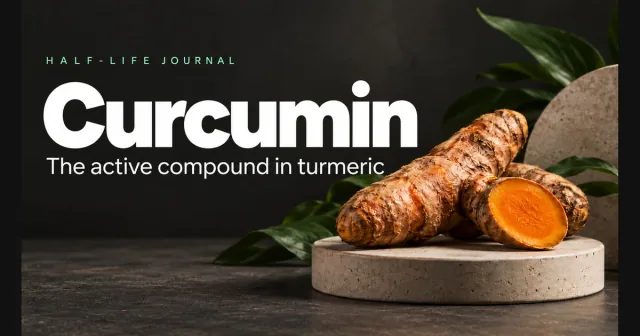
Turmeric (Curcuma longa) is a plant whose root (rhizome) is dried and powdered and used as a spice. Curcumin gives it its yellow color; its health effects are mostly attributed to curcuminoids. The NCCIH reports that turmeric has been used in Chinese, Indian (Ayurvedic), Islamic, and Thai traditional medicine for complaints such as indigestion, colds, skin infections, arthritis, abdominal pain, and liver diseases. [2] Traditional use does not mean that something works in controlled studies.
The share of curcumin in turmeric is not constant. Tayyem et al. analyzed 28 spice products identified as turmeric or curry powder and two negative controls by high-performance liquid chromatography (HPLC). Pure turmeric powder contained a mean of 3.14% curcumin by weight; apart from one of the curry powder samples, the amount of curcumin was low and the content highly variable. [1] So curry powder is not a substitute for turmeric, and not every “turmeric-containing” spice carries the same amount of curcumin.
Detailed guideCurcumin: how it differs from turmeric, the absorption problem, and liver safetyAre the benefits of turmeric as a spice proven?
Short answer: there is no evidence that turmeric in kitchen amounts changes disease outcomes. There are two reasons for this.
First, the studies were conducted with extracts. According to the NCCIH, many studies on turmeric and curcumin concern knee osteoarthritis, nonalcoholic fatty liver, and blood lipids; however, it cannot be said with certainty that it is useful for any health purpose. In these studies the products differ from one another in curcumin amount and often contain other plant substances such as piperine from black pepper. [2] Tayyem et al. also state that it is not known whether the amount of curcumin in spices is enough to claim an effect on biological effects and cancer risk. [1]
Second, the difference in amount is large. In a study in India in 1998, human volunteers were given 2 g of curcumin; when taken alone, serum levels were either undetectable or very low. [4] If turmeric powder is assumed to contain a mean of 3.14% curcumin (Tayyem), 2 g of curcumin corresponds to about 64 g of turmeric powder (2 ÷ 0.0314 ≈ 63.7; this is a calculation, not a study finding). Gram-level curcumin doses have also been used in clinical studies (for example 3 g per day in the ulcerative colitis study; curcumin benefits page); turmeric added to a dish falls below this level. In addition, curcumin itself is poorly absorbed.
Does golden milk (turmeric milk) work?
“Golden milk” is a drink in which turmeric is mixed with milk (and often black pepper); various claims circulate about immunity, sleep, and inflammation. No controlled study is known that examined golden milk as a drink and measured disease outcomes in humans; the claims are mostly carried over from studies conducted with curcumin extracts. The doses in these studies are gram-level curcumin, and the turmeric powder added to a cup of drink falls far below this level (the calculation above). Therefore the claim that golden milk prevents or treats a particular disease has no basis from human studies.
Is using turmeric in cooking safe?
The NCCIH’s safety summary evaluates products in capsule and extract form: turmeric or curcumin taken orally in traditional formulation (without enhanced absorption) at recommended amounts is “likely safe” for up to 2–3 months; nausea, vomiting, reflux, stomach upset, diarrhea, or constipation may occur. [2] It is noted that turmeric supplements may not be safe in pregnancy and that very little is known about the safety of use above the amount found in food during breastfeeding. [2] This assessment by the NCCIH addresses turmeric and curcumin products taken orally, not the amount of spice added to food.
Reports of liver injury, on the other hand, are associated with supplement products, especially formulations with enhanced absorption and high doses; details and sources are in the liver section of the curcumin guide. The safety of high-dose or long-term use has not been measured even with products without enhanced absorption.
What is the lead problem in turmeric?
The main concrete risk of turmeric as a spice is lead contamination. Lead chromate (PbCrO₄) is a yellow pigment added to turn the color of turmeric bright yellow; lead is neurotoxic, and this adulteration poses a serious risk to human health and development. [3]
Bangladesh (2019). Forsyth et al. interviewed 152 people at different points in the supply chain in nine major turmeric-producing regions and two minor-producing regions and collected 524 turmeric, pigment, powder, and soil samples. Lead and chromium concentrations in turmeric powder were highest in the Dhaka and Munshiganj regions (highest lead 1,152 µg/g); in the nine major producing regions the highest value was 690 µg/g. Evidence of lead chromate pigment adulteration was found in seven of the nine regions, and yellow pigments were found to contain 2–10% lead by weight. Wholesalers reported that the practice had continued for more than 30 years and stemmed from consumers’ preference for bright yellow curry. [3]
South Asia (2020–2021 samples). Forsyth et al. (2024) collected 356 turmeric samples (180 dried roots, 176 powders) from 23 major cities in India, Pakistan, Sri Lanka, and Nepal. Lead above 2 µg/g was detected in 14% of samples (n = 51); in samples with 18 µg/g and above, the lead/chromium molar ratio was close to 1:1, suggesting lead chromate adulteration. Values above 1,000 µg/g were found in Patna (Bihar, India), Karachi, and Peshawar (Pakistan); child blood lead levels modeled from these values reached up to 10 times the CDC threshold. [5]
Effect of the intervention. After an enforcement program implemented in Bangladesh between 2017 and 2021 with media, consumer education, and rapid lead detection technology, the proportion of turmeric samples on the market with detectable lead fell from 47% in 2019 to 0% in 2021 (n = 631); the proportion of mills with traces of lead chromate fell from 30% to 0%. [6] So the problem could be solved through enforcement; however, this result is for Bangladesh only.
These studies were conducted in Bangladesh and four South Asian countries; they did not measure turmeric on the Turkish market.
Is turmeric a spice or a supplement in Türkiye?
The Turkish Food Codex Communiqué on Food Supplements (Türk Gıda Kodeksi Takviye Edici Gıdalar Tebliği, 2013/49) defines a food supplement as products with a set daily intake dose, prepared from plant substances with a nutritional or physiological effect and from concentrates or extracts of bioactive substances, in capsule, tablet, lozenge, single-use powder sachet, liquid ampoule, dropper bottle, or similar liquid or powder forms. [7] The definition is built on the form of presentation and a set daily intake dose: turmeric powder added to food is not presented this way; curcuminoid extracts in capsule and tablet form, on the other hand, can be treated within the scope of this definition. The label, presentation, or advertising of food supplements cannot include statements claiming to prevent, treat, or cure a disease. [7] This 2013 text of the Communiqué was later amended.
What does the evidence say for those who want to use turmeric in food?
The evidence gives no basis for either extreme, such as “turmeric is healthy” or “it does not work.” What is known is this: turmeric powder used as a spice contains a mean of 3.14% curcumin, and the biological effect of this amount is unknown [1]; the doses in clinical studies are at the gram level; and the best-documented spice risk of turmeric is lead contamination, which depends on source and enforcement. [3] [5] At supplement-level doses, topics such as the liver, gallbladder, iron absorption, and anticoagulant drugs come into play; these are covered in the main curcumin guide; general information about iron deficiency is in the iron guide.
This guide does not recommend a personal amount.
Frequently asked questions
What are the benefits of turmeric?
Turmeric has been used in traditional medicine for complaints such as indigestion, arthritis, and abdominal pain; the NCCIH, on the other hand, states that it cannot be said with certainty that turmeric or curcumin is useful for any health purpose. Clinical studies have been conducted with curcumin extracts, not with spice amounts.
Does golden milk work?
No controlled human study is known that examined golden milk as a drink and measured disease outcomes; the claims in circulation are carried over from curcumin extract studies. The turmeric in a cup falls far below the gram-level curcumin doses in these studies.
How much curcumin is in turmeric powder?
In an analysis of 28 spice products, pure turmeric powder contained a mean of 3.14% curcumin by weight; in curry powders the amount is low and highly variable.
Can there be lead in turmeric?
Addition of lead chromate pigment to turmeric has been documented in Bangladesh and in India, Pakistan, Sri Lanka, and Nepal. These studies did not measure the Turkish market. In Bangladesh, with enforcement, the proportion of market samples with detectable lead fell from 47% to 0%.
Sources
- Source Curcumin content of turmeric and curry powders. (2006)Back to text ↑
- Guideline / review NCCIH — Turmeric: Usefulness and Safety (Last Updated: April 2025) (2025)Back to text ↑
- Source Turmeric means "yellow" in Bengali: Lead chromate pigments added to turmeric threaten public health across Bangladesh. (2019)Back to text ↑
- Human study Influence of piperine on the pharmacokinetics of curcumin in animals and human volunteers. (1998)Back to text ↑
- Source Evidence of turmeric adulteration with lead chromate across South Asia. (2024)Back to text ↑
- Source Food safety policy enforcement and associated actions reduce lead chromate adulteration in turmeric across Bangladesh. (2023)Back to text ↑
- Institution Resmî Gazete 16 Ağustos 2013, Sayı 28737 — Türk Gıda Kodeksi Takviye Edici Gıdalar Tebliği (Tebliğ No: 2013/49) (2013)Back to text ↑
Method: Institutional clinical guidance and relevant studies were compared. Each finding is presented with its population, outcome, sources and limitations. Independent medical review has not yet been completed.
Updated
This content is for information only and is not medical advice. It does not recommend doses, products or vendors. Talk to your clinician before making any health decision.